How to Spot Counterfeit Products Online
This page contains affiliate links. We may earn a commission at no extra cost to you.
On this page
Counterfeit and lookalike products are a real problem on big online marketplaces. Some are obvious copies of luxury goods. Many more are quieter: electronics, chargers, cosmetics, hobby gear and spare parts that use a well-known product name without being made by the company behind it. At best you get something that works less well. At worst you get something unsafe, such as a charger without proper protection or a cosmetic with unknown ingredients.
You can avoid most of these with a few habits. The key idea is simple: check who made it, who is selling it, and whether the price makes sense.
Counterfeit, lookalike or generic?
It helps to separate three things:
- Counterfeit: a product that pretends to be a specific brand, with copied logos and packaging.
- Lookalike or clone: a product that uses the same model name or design as a known product, but without the brand. Some are reasonable alternatives; some are poor copies.
- Generic: an unbranded product that does not pretend to be anything else. Generics can be perfectly fine, as long as you know what you are buying.
The problem is not unbranded products in themselves. The problem is not knowing which one you are getting, or paying brand-name money for something that is not the brand.
Check the brand name carefully
Read the title and the specification table for the actual brand. Watch for:
- The brand name missing entirely while the model name is copied exactly.
- Small spelling changes, extra letters or spaces in a well-known name.
- A brand listed as "none", "generic" or "OEM" on an item whose title uses a famous product name.
- Logos that look slightly off in the photos: different fonts, spacing or colors.
If you know which company makes the genuine product, visit that company's own website. Many brands list where their products are officially sold and how to identify the genuine item. Some publish warnings about clones with photos of the differences.
Check the seller
On a marketplace, the store matters as much as the product. Look for an official brand store or an authorized reseller if the brand names one. Check the store's age, feedback volume and its "item as described" score. Read recent negative feedback for mentions of "fake", "copy" or "not original". Our guide on how to buy safely on AliExpress walks through store checks in more detail, and they apply to most marketplaces.
Does the price make sense?
Price is a strong signal, but it can point either way.
- Much cheaper than everywhere else often means a copy, a used or refurbished item, or a part rather than the complete product.
- Much more expensive than the genuine product can also be a warning sign. Some listings use a well-known product name, charge more than the original, and rely on shoppers assuming a higher price means quality.
Before buying, find the genuine product's normal price from the brand's own store or a reputable retailer. That gives you a reference point for everything else.
A worked example: two "RTL-SDR V4" listings
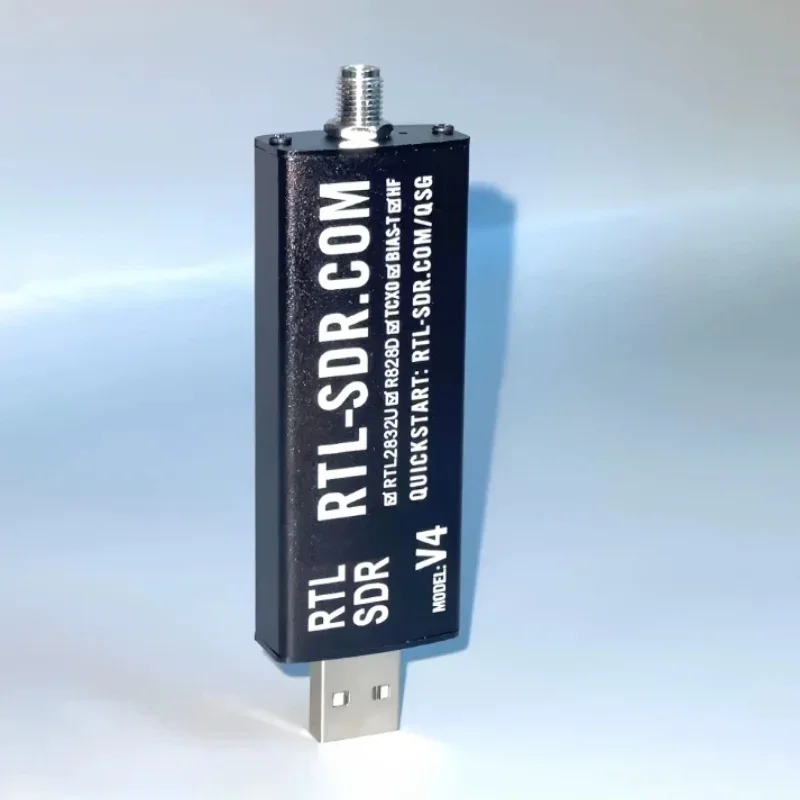
Small software-defined radio receivers are a good example because one specific product name is widely known. In the listings below, one is from a store selling the RTL-SDR Blog V4, the branded product that hobbyists usually mean when they say "V4". The other is an unbranded listing that uses the same "RTL SDR V4" wording and chip names but costs noticeably more.
We are not saying the second listing is fraudulent. It may include extra items, such as an antenna or amplifier mentioned in its title, and it may work perfectly well. The lesson is to compare carefully:
- Brand: does the title and specification table name the brand you want, or just the model name?
- Contents: what exactly is in the package? Extras can explain a higher price, or they can be low-value padding.
- Seller: how long has the store been open, and what do buyers say about authenticity?
- Price: how does it compare with the genuine product from the maker's own listed sellers?
If you want the branded product, buy it from a seller you can tie to the brand. If you are happy with an alternative, at least make sure you are not paying more for less.
Photos and packaging
Product photos are easy to copy. Some counterfeit listings use the genuine maker's own images. Look at buyer photos instead, and compare them with photos on the brand's website. Things to compare include logo placement, port and button layout, label text, serial number stickers and packaging design.
When the item arrives, check:
- Packaging quality, spelling on the box and manual, and whether safety or certification marks are present and look right.
- Weight and finish compared with what you expected.
- Serial numbers, where the brand offers a way to check them.
Be especially careful with anything that plugs into the wall, contains a lithium battery, touches your skin or goes in your mouth. Counterfeit chargers, batteries, cosmetics and supplements can be genuinely dangerous. If in doubt, buy from the brand or a major authorized retailer.
Reviews can mislead, too
A counterfeit listing can carry hundreds of positive reviews, sometimes moved over from a different product. Read recent reviews, look at photo reviews and search the reviews for words like "original" and "fake". Our guide on how to spot fake reviews explains the patterns.
If you receive a counterfeit
- Do not use it if it could be unsafe.
- Photograph the item, packaging and labels next to the listing.
- Contact the seller through the platform and ask for a refund.
- If that fails, open a dispute under "not as described" or "counterfeit", attaching your photos.
- If the platform does not help and you paid by credit card or PayPal, you may be able to dispute the payment.
- Report the listing to the marketplace. In the US, you can also report it to the FTC at ReportFraud.ftc.gov.
Rules on counterfeit goods, and on what you can do about them, differ between countries. In some places importing counterfeits can lead to the parcel being seized at the border, which is one more reason to buy carefully.
Summary
Check the brand name, check the seller, compare the price against the genuine product, and look at real buyer photos. When a listing borrows a famous product name, slow down and compare carefully before you pay.
Example listings mentioned

RTL-SDR Blog V4 dongle
Genuine branded itemA listing for the branded RTL-SDR Blog V4 receiver, dongle only. The title names the brand clearly, which is the first thing to look for when a product name is widely copied.
Listing: RTL-SDR Blog RTL SDR V4 R828D RTL2832U 1PPM TCXO SMA Software Defined Radio Dongle Only
Unbranded "RTL SDR V4" listing
Comparing carefullyAn unbranded listing using the same model wording at a noticeably higher price. It may include extras such as an antenna. Compare the brand, contents, seller and price carefully before choosing.
Listing: RTL SDR V4 Signal Receiver Antenna R828D RTL2832U 1PPM 500K - 1.7G Software Defined Radio…